Wireless Reverse Charging
- 3.8
- Rating
- 500.00K
- Installs
- Free
- Price

 Analysis by App-foxy
I tested Wireless Reverse Charging as the kind of utility you open when one phone is nearly empty and another phone might be able to help. Its purpose sounds simple: use one phone as a source and another as the device receiving power. In practice, the useful question is not just whether the idea sounds convenient, but whether both phones, their positioning, and the remaining battery make the handoff worthwhile.
That makes this a slightly unusual app in the Libraries & Demo category. It is not a replacement for a charger, power bank, or cable. Instead, it presents a focused way to explore or use a phone-to-phone charging workflow. I found it most interesting in situations where carrying another accessory is inconvenient, while also discovering that the hardware behind the phones matters far more than the app itself.
From a nearly empty phone to a practical handoff
I focus this section on the moment when a low battery becomes a practical problem rather than a mild inconvenience: deciding whether a nearby phone can help, and whether the trade-off is worth it. I also consider how to make that handoff less awkward when both people need their devices afterward. From there, the key question is how much speed to expect from a short boost.
You May Also Like

 Blood Strike: 2.5 Anniversary
Blood Strike’s Loadouts Turn Every Drop Into a Tactical Gamble
A close look at Blood Strike’s custom loadouts: how fast access to signature weapons reshapes its battle royale rhythm, rewards preparation, and narrows the gap between fights.

 Pandora - Music & Podcasts
Pandora’s Music Is Easy to Start, but Harder to Recover
Pandora’s strength is its low-effort path from a seed to a station. Its weak spot is how much confidence it asks you to place in connection, setup, and quiet recovery.

 8 Ball Pool
 Is Built on Rivalries, Rematches, and Routine
A close look at the rivalries, rematches, shared routines, and unanswered safety questions that turn a quick pool match into a persistent mobile community.

 Samsung Music
’s Quiet Strength Is Playing What You Already Own
Its reach comes less from spectacle than from dependable access to a personal library. That simplicity is both the app’s strongest retention engine and its ceiling.

 AccuWeather: Weather Radar
AccuWeather Review: A Quick, Clear Forecast for Everyday Decisions
For everyday plans, the best forecast is the one you can understand quickly. AccuWeather makes rain timing, radar, and local conditions easy to act on, with a few trade-offs.

 Hill Climb Racing
Why Hill Climb Racing Still Turns Crashes Into One More Run
A tiny car, a bumpy hill and one more upgrade: Hill Climb Racing keeps resurfacing because its simple chaos makes every near-miss feel personal.
More From Our News Desk



Starting with the right expectation
The first thing I would tell a friend is to treat Wireless Reverse Charging as a helper for compatible devices, not as a magic battery generator. The phone supplying energy needs suitable wireless power-sharing hardware, and the receiving phone needs to accept wireless charging. If either side lacks the necessary capability, an app cannot create it through software alone.
This distinction is important because the short store description, “Wireless Charging,” can sound broader than the real situation. The app is most relevant when you already have two phones and want to investigate whether one can assist the other. It is less suitable if your only goal is to recharge a phone as quickly as possible. A wall adapter, cable, or power bank remains the more predictable choice.
I also approached the workflow with a realistic starting condition: the receiving phone was low enough that a small boost could help, but not so empty that I needed an immediate, guaranteed rescue. That is the sensible window for this kind of experiment. If the source phone is also close to empty, transferring energy may simply leave two devices with less useful battery.
Preparing both phones
The process begins before opening the app. I checked the battery level on both devices, removed anything that could interfere with close contact, and made sure the backs of the phones could sit flat against each other. Thick cases, camera bumps, textured surfaces, and misaligned charging coils can turn a promising setup into an inconsistent one.
This is one of the less obvious practical lessons: alignment is part of the charging process. Wireless power does not travel across a large gap just because two phones are touching somewhere. The coils need to be close, and their positions need to match. When the receiving phone showed no response, moving it slowly across the back of the source phone was more useful than repeatedly tapping the app.
Wireless Reverse Charging is free, which makes it easy to try without committing money to a specialized accessory. It is intended for Everyone, so its presentation is accessible rather than aimed only at technical users. The developer is Masivapp, and the app has reached over 500 thousand installs, with an average rating of 3.9 from roughly 5 thousand ratings. Those figures suggest that many people are curious about the concept, but they should not be read as a guarantee that every phone combination will work.
Moving through the charging attempt
Once the phones were ready, I used the app as a guide into the reverse-charging scenario. The important handoff is between the source phone’s wireless power-sharing function and the receiver’s charging system. On compatible hardware, the source phone is the device that needs to be configured to share energy; the other phone must be placed in the receiving position.
I found it helpful to keep the setup still for a moment after placing the phones together. Wireless charging can be sensitive to small movements, and picking up the pair to check progress may interrupt the connection. A flat table is better than trying to hold both phones in one hand, especially when the source phone has a camera module that prevents the backs from sitting evenly.
The app cannot remove the normal trade-offs of wireless power. Energy is lost during transfer, and the source phone may warm up while doing the work. That means the result is usually better viewed as an emergency top-up than a full recharge. If I needed enough power for a long trip, navigation, or an extended call, I would use a cable or power bank instead of relying on this arrangement.
Another useful tip is to disable unnecessary activity on both phones before starting. Streaming video, gaming, navigation, or a bright screen can consume power while the transfer is taking place. Even without changing any charging setting, reducing the receiver’s workload makes the small amount of incoming energy more useful. On the source side, avoiding heavy use helps preserve the battery that is being shared.
The handoff between people and devices
The most realistic scenario I found was a short handoff between two people. Imagine meeting someone at a station: your phone is low, their compatible phone still has enough charge, and neither person has a cable that matches the other device. Instead of passing around a charger, the source phone can stay on a table while the receiver is placed carefully on top of it.
That scenario also reveals the social friction. Both people need to agree to leave their phones together and avoid moving them. If either person needs to use their device during the transfer, the arrangement becomes awkward. A cable is more flexible because the phones can be separated, held, or used while charging. Reverse wireless charging is convenient mainly when both devices can remain idle for a while.
For travel, I would use the app as a backup plan rather than my primary charging method. It could be useful when a companion has a compatible source phone and only a modest boost is needed to make a call or display a ticket. It is much less attractive for charging several devices, restoring a completely drained phone, or keeping a phone alive through a full day away from a socket.
What the result actually means
A successful result is not simply seeing a charging symbol. I would leave the phones in place briefly and then check whether the receiving battery is genuinely increasing. The source phone should also be monitored, because the useful outcome is a better-balanced situation, not a receiver that gains a little power while the source loses too much.
When the setup works, the biggest benefit is convenience. There is no separate power bank to remember, and the source phone can act as a temporary emergency supply. That is a meaningful advantage for people who already carry two phones or travel with someone whose device supports power sharing.
Still, the result is best described as a rescue boost. Wireless transfer is generally slower and less efficient than plugging the receiver into a suitable adapter. The phones may become warm, and the source device’s battery level can fall quickly enough to make the exchange feel expensive. I would use it to gain enough power for an essential task, then switch to a normal charger as soon as one became available.
The app’s current version is 11.0, and it runs on Android 7.0 or later. That broad operating-system range is useful for people with older Android phones, but the age of the operating system does not tell you whether the phone has the required charging hardware. Compatibility is determined by the physical capabilities of each model, so checking the phone manufacturer’s specifications remains important before depending on the workflow.
Where the flow breaks
The first failure point is hardware incompatibility. If the source phone cannot share power wirelessly, or the receiving phone cannot accept it, there is no setting inside an app that can solve the problem. This is the main reason I would not install Wireless Reverse Charging expecting it to turn every Android phone into a wireless power bank.
The second is poor coil alignment. A phone can appear to be touching another phone while the charging areas are actually offset. Camera islands make this especially troublesome. Removing a thick case, placing the phones back-to-back, and adjusting their position gradually are practical fixes, but they do not guarantee success.
The third is an unsuitable battery situation. If the source phone is needed for navigation, authentication, or an urgent call, giving away its remaining energy may be a bad trade. I would set a personal limit before starting: the source phone should retain enough power for the rest of the journey or the next important task. Without that boundary, the handoff can solve one problem while creating another.
Heat is another reason to stay nearby rather than leaving the phones unattended for a long period. Wireless charging already involves energy loss, and reverse charging adds another layer to the exchange. If either device becomes noticeably hot, I would stop the transfer and let it cool. The app is not a substitute for sensible battery care.
There is also a usability limitation in the idea itself. A phone-to-phone transfer ties the devices together physically. Notifications, calls, movement, and accidental bumps can interrupt the process. A cable may look less elegant, but it is often easier to manage. A power bank is even better when the user needs to walk around, keep the source phone separate, or charge more than one device.
How it compares with ordinary alternatives
Compared with a wall charger, Wireless Reverse Charging is slower and less dependable, but it can help when there is no outlet nearby. Compared with a cable, it avoids connector problems and does not require the two phones to use matching ports. However, the phones must stay aligned, which creates its own kind of inconvenience.
Compared with a power bank, the app-based approach saves you from carrying another object, but it uses the source phone’s own battery. A power bank is purpose-built for the job and usually offers a more predictable reserve. If I were preparing for a flight, a hike, a long commute, or a day of navigation, I would choose the power bank first.
Compared with the wireless charging feature already built into a compatible phone, the app’s value is mainly in making the workflow easier to approach and understand. It does not change the physical limits of the hardware. Users who already know their phone’s reverse-charging controls may find the app unnecessary, while newcomers may appreciate having a dedicated place to explore the concept.
Who should try it
I think Wireless Reverse Charging is worth trying if you regularly carry two phones, often help family members with low batteries, or want an emergency option when a cable is unavailable. It is also a reasonable fit for curious users who want to test a phone’s wireless power-sharing capability without paying for another accessory.
I would skip it if you expect fast charging, reliable support across unrelated phone models, or a replacement for a proper charger. It is not the right choice for someone whose phone frequently reaches zero, because the source device must have enough reserve to give away. Users who dislike keeping two phones pressed together will probably find a cable more practical.
My final view is positive but measured. Wireless Reverse Charging is a useful emergency workflow, not a complete charging solution. Its best moment is a short, carefully aligned handoff that gives a low phone enough power to complete something important. Its weakest moment is when users expect software to overcome missing hardware, poor alignment, heat, or limited battery reserves.
With that expectation, the app makes sense as a free utility in the Libraries & Demo space. I would install it before a trip only after confirming that my source phone supports wireless power sharing and that the other phone can receive wireless power. Used that way, it can turn an otherwise awkward battery problem into a manageable temporary fix, while still leaving the cable or power bank as the dependable backup.
FAQs for Wireless Reverse Charging
01What is Wireless Reverse Charging and how does it work?
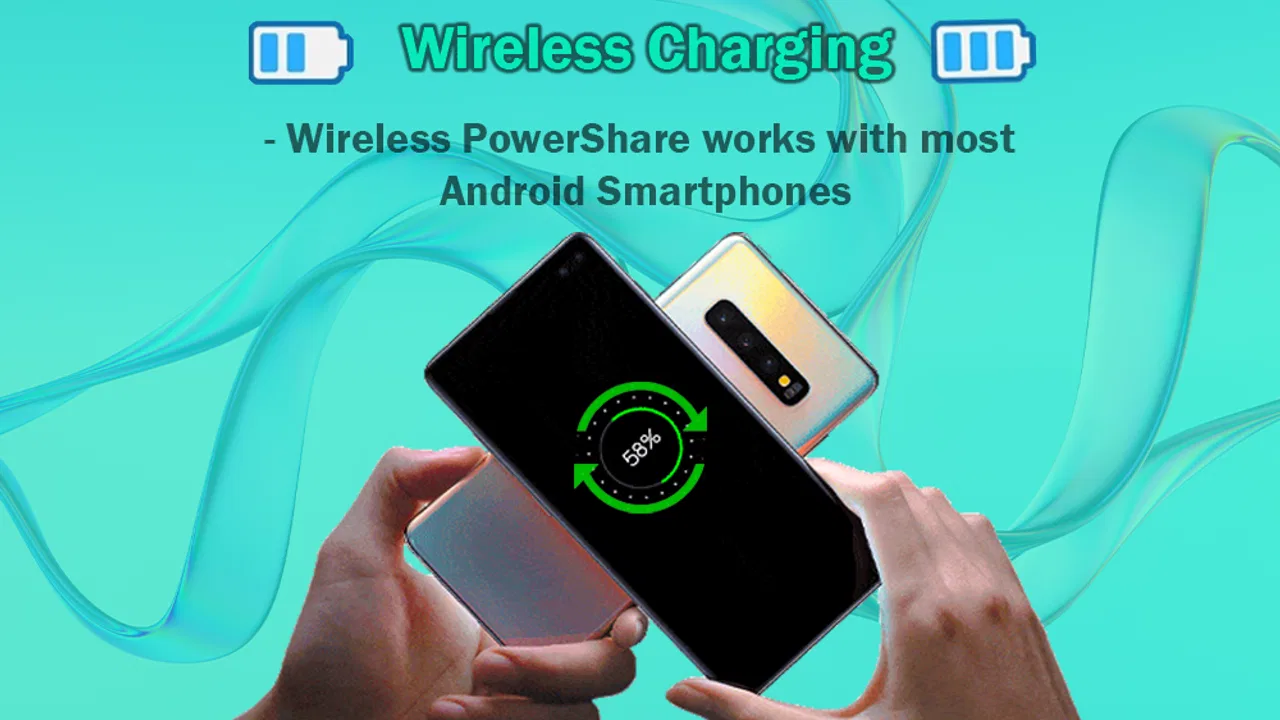
Wireless Reverse Charging is a feature that allows your device to act as a power bank, wirelessly charging other devices. It uses electromagnetic fields to transfer energy between devices that are compatible with the Qi standard. Simply enable the feature on your device and place another Qi-enabled device on top to start charging.
02Which devices are compatible with Wireless Reverse Charging?
Most modern smartphones, tablets, and accessories that support Qi wireless charging are compatible. However, it's important to check the specifications of both your device and the one you intend to charge to ensure compatibility. Some older devices may not support this feature or may require additional accessories.
03Does using Wireless Reverse Charging affect my device's battery life?
Using Wireless Reverse Charging can impact battery life over time, as it increases your device's power usage. However, modern devices are designed to handle these demands efficiently. It's advisable to use this feature sparingly and ensure your device is fully charged before enabling it to avoid excessive battery drain.
04How can I enable Wireless Reverse Charging on my device?
To enable Wireless Reverse Charging, navigate to your device's settings menu and look for the battery or connectivity options. There should be an option labeled 'Wireless PowerShare' or 'Reverse Charging.' Turn it on, and your device will be ready to charge other compatible devices wirelessly.
05Are there any limitations or drawbacks to using Wireless Reverse Charging?
While convenient, Wireless Reverse Charging has limitations such as slower charging speeds compared to wired options. Not all devices support this feature, and it may require precise alignment between devices. Additionally, using it can generate heat, so it's essential to monitor temperature to prevent overheating.
Pros
- Convenient for charging on the go.
- No need for extra cables or adapters.
- Simple to activate and use.
- Supports a variety of devices.
- Energy-efficient technology.
Cons
- Consumes phone battery quickly.
- Not compatible with all devices.
- Charging speed can be slow.
- May cause device overheating.
- Limited range for effective charging.

Wireless Reverse Charging
Gallery